If you’re concerned about a potential infestation, this guide provides the essential visual and physical markers needed to identify bed bugs with confidence. From spotting early-stage nymphs to recognizing the signs of an active colony, we’ll help you determine exactly what you’re dealing with so you can take the right next steps.
The images plus further information can also be found on https://bed-bugs.co.uk
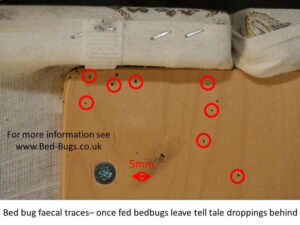
Fecal traces:
Bed bugs leave behind tell tale signs near where they “nest” or “hide”. When deposited on solid surfaces such as bed frames or slats, they are raised and bumpy to the touch. If it is smooth to the touch then it is not a fecal trace and is more likely to be a stain of natural discoloration.
Shed Skins
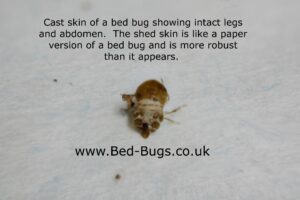
Finding translucent, papery shells on your bedding or furniture is a strong indicator of a bed bug problem. These are the shed exoskeletons, or castings, left behind as the insects grow through five distinct nymph stages. These casts look exactly like a smaller version of the insect itself, ranging in size from 1 to 4 mm long. Because each nymph sheds five times, multiple castings are often found, confirming an active and breeding infestation.
Bed Bug Nymphs
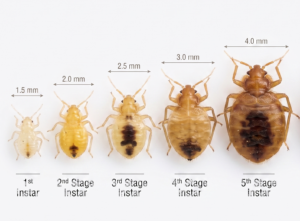
- 1st stage instars are translucent, white or yellow, and 1.5 mm (1/16th inch) long
- 2nd stage instars are translucent, white or yellow, and 2 mm (5/64th inch) long
- 3rd stage instars are translucent, yellow or light brown, and 2.5 mm long
- 4th stage instars are somewhat translucent, yellow or light brown, and 3 mm (3/16 inch) long
- 5th stage instars are somewhat translucent, light or darker brown, and 4 mm (1/8th inch) long
Adult Bed Bugs
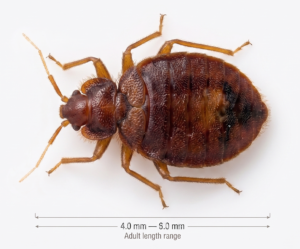
- The average length of an adult bed bug is between 4–6 mm long (1/8–1/4 inches)
You should also be able to clearly distinguish the following features:
- 6 legs
- 2 short antennae
- A large, flat, and oval abdomen with horizontal creases
- No wings